
The Stanley Award for International Research is given annually to outstanding University of Iowa students in all academic fields to support research abroad, learning activities in international studies and international career interests.
The Stanley-University of Iowa Foundation Support Organization (SUIFSO) was created in 1979 through the generosity of University of Iowa alumni C. Maxwell (Max) and Elizabeth (Betty) M. Stanley. Since its inception, SUIFSO has funded projects that promote public understanding and cooperative action on critical international issues across the university, including the creation of the Stanley Undergraduate and Graduate Awards for International Research.
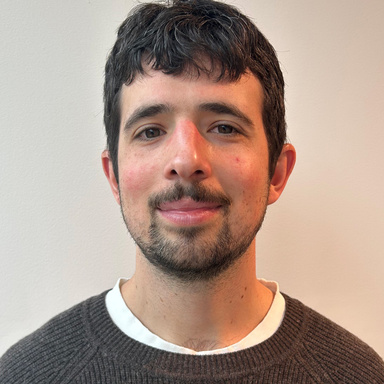
David Andrews
Degree: MFA, poetry
Research project: Studying the anti-poetry of Nicanor Parra in Santiago, Chile
Destination: Chile
Home city: Louisville, Colorado
“The Stanley Award for International Research will give me the opportunity to spend a month embedded in the Nicanor Parra Library at Universidad de Diego Portales (UDP) to comb through its archives in preparation for my creative writing MFA thesis. The close reading I can do alongside UDP professors will help me define anti-poetry and reflect this vision back onto my own work in Iowa City during the second year of the MFA program.”

Timothy Arnold
Degree: PhD, mass communications
Research project: Trust, Communication, and the Politics of Vaccination
Destination: Brazil
Home city: Skowhegan, Maine
“My international research examines how vaccination campaigns in Brazil and the United States build public trust through participatory communication strategies. Collaborating with public health scholars in São Paulo allows me to study one of the world’s most successful immunization systems from a comparative perspective. This work is important to me because I am committed to understanding how institutions can communicate in ways that include communities rather than simply instruct them.
The Stanley Award will make it possible for me to carry out fieldwork in São Paulo, including interviews, archival research, and collaboration with Brazilian public health researchers. Direct engagement with local institutions is critical to understanding how participatory communication models function in practice and to producing a rigorous comparative dissertation.”
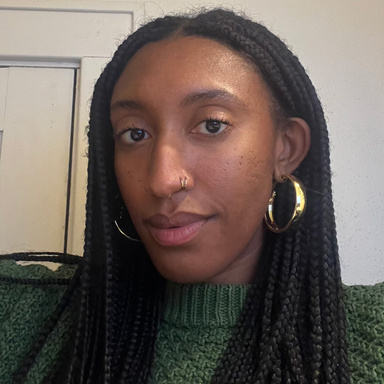
Maya Arthur
Degree: MFA, Iowa Writers’ Workshop (poetry)
Research project: Ordinary Paris: Walking Research on Black Migration
Destination: Paris, France
Home city: Maryland
“My international research will produce a sequence of walking poems for my MFA thesis by investigating how Black Americans in Paris during the 1920s–1940s claimed the ‘ordinary’ beyond the constraints of racial hypervisibility in the United States. Through archival research in Montmartre and guided by filmmaker Melvin Van Peebles’s concept of ‘the right to be ordinary’ and scholar Kevin Quashie’s theory of ‘the sovereignty of quiet,’ I will trace spaces that reveal Black interiority often overlooked in dominant historical narratives. This work is important to me because it explores how poetry and embodied movement can recover forms of Black presence documented in archives but overshadowed by more visible, celebrated performances.
The Stanley Award for International Research will make this embodied and archival research possible and support my development of a new poetic form. By engaging historical materials through physical presence and creative response, this research will allow me to approach the archive in a way that is immersive, ethical, and generative for my creative practice.”

Baishali Bhaumik
Degree: PhD, anthropology
Research project: Conservation, Criminalization, and Care: Women Prawn Collectors in the Tiger Landscapes of the Sundarbans
Destination: India
Home country: India
“My project examines how wildlife protection regimes reshape the lives of women whose labor sustains the delta’s informal economies. I analyze how conservation policies, anti-poaching laws, and environmental governance can simultaneously frame marginalized communities as illegal resource users while relying on their labor and ecological knowledge. By situating care for endangered species alongside the regulation of women’s work, my research investigates how environmental protection produces new hierarchies of value, belonging and survival in a rapidly changing landscape.
The Stanley Award for International Research enables extended fieldwork and archival research in the Sundarbans, allowing me to conduct in-depth interviews, engage with conservation institutions, and access regional records central to my analysis. This sustained, place-based research is essential to producing a rigorous dissertation that contributes to feminist political ecology, environmental anthropology, and critical studies of conservation governance.”

Savannah Bustillo
Degree: MA/MFA, printmaking; certificate in book arts
Research project: Site-specific papermaking in Capellades, Spain
Destination: Spain
Home city: Albuquerque, New Mexico
“In the town of Capellades, Spain, lies one of the most significant papermaking sites in Europe from the 18th and 19th centuries. Today, this legacy is preserved through the Capellades Paper Mill Museum. By working with museum staff to create paper in their historic studios and using my own mobile equipment to create sheets at key sites along the historic ‘Paper Routes,’ I hope to generate new site-specific models of making.
The Stanley Award for International Research will allow me to experiment with on-site methodologies of making as someone who combines art and research. This project connects to my site-specific artistic practice, exploring how Catalan papermaking carries cultural identity through place, language, and local memory. The handmade sheets will be shown in my MFA thesis exhibition.”
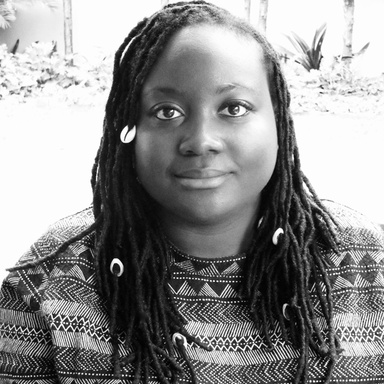
Efemia Chela
Degree: MFA, fiction, creative writing
Research project: Object, Archive, and Afterlife: African Material Culture in French Collections
Destination: France
Home city: Chikankata, Zambia
“My research focuses on artifacts, artistry, and historical narratives in the Musée du quai Branly–Jacques Chirac, the Maison des Mondes Africains (MANSA), and the Bibliothèque Nationale de France. This work supports my thesis and novel manuscript, which examines craft traditions from ancient tribes and the ethics and challenges of providing ordinary people with access to cultural heritage. It is important to me because I am passionate about helping Africans become more informed about our history and encouraging the rest of the world to better understand African culture and view it in a more positive light.
The Stanley Award for International Research is essential for travel to key state institutions in France that hold more than 70,000 African artworks. Conducting material analysis of these collections will allow me to write with greater historical depth and include the factual detail necessary to ensure the authenticity of my thesis.”

Mahealani Deenik
Degree: MFA, poetry
Research project: Hoʻoulu Lāhui: 19th-Century Narratives of King Kalākaua’s Study Abroad Program in England
Destination: England
“I will spend four weeks in London researching the strategies—specifically the Hawaiian Youths Abroad Program—implemented by King Kalākaua and preceding monarchs to protect Hawaiian sovereignty and knowledge in the face of prolific U.S. imperialism in the late 19th century. As the only Native Hawaiian student currently enrolled in the Iowa Writers’ Workshop, I am dedicated to researching Hawaiian language and history as they continue to exist and evolve in American universities and pedagogies. To further my understanding of this relationship, I will research the political and social exchanges between Hawaiʻi and its ally England during the short-lived Hawaiian Youths Abroad Program, which existed from 1880 to 1892.
The Stanley Award for International Research provides the support necessary to visit three London archives and examine visual materials and documents that reveal insights into Hawaiʻi’s international presence. This award is critical to the completion of this research and the creation of a subsequent poetry manuscript that explores hybrid cultural identity across generations of Hawaiian experience and reinforces my responsibility to perpetuate and contribute to the shared knowledge, education, and literature of my lāhui (nation).”

Caite Dolan-Leach
Degree: PhD, English, literary food studies
Research project: Textual Traces of the Nineteenth-Century Grand Restaurants
Destination: France
Home city: Ithaca, New York
“I am traveling to Paris to research predominantly 19th-century textual traces of ‘the restaurant’ as part of my dissertation. I will explore both how restaurants are represented within literature—specifically novels—and how they generate their own literature in the form of menus, reviews, and recipes through archival research.
The Stanley Award for International Research will enable me to travel to Paris and Nice to explore site-specific archives and investigate the texts of still-existing 19th-century restaurants in France, including menus and reviews.”

Sophie Dubber
Degree: MFA, creative writing
Research project: Archaeological Superpower and Environmental Threat: Peat Bogs in Ireland
Destination: Ireland
Home city: Toronto, Canada
“My project explores the unique reputation of peat and peat bogs in Irish culture, paying special attention to the environmental impact of peat harvesting as well as peat’s rare ability to preserve natural tissue and fibers over thousands of years.
The Stanley Award for International Research will allow me to travel to Dublin to research peat bogs and the ‘bog bodies’ recovered from them in person.”

Maeve Dunne
Degree: JD, University of Iowa College of Law
Research project: Environmental Harm, Arbitrary Detention, and Indigenous Peoples: An Analysis of WGAD Jurisprudence in the Philippines
Destination: Philippines
Home city: Iowa City, Iowa
“This summer, I will conduct research as an intern with Indigenous People’s Rights International in the Philippines, supporting cases submitted to the Working Group on Arbitrary Detention that examine the impacts of arbitrary detention on Indigenous communities. Through this work, I will gain hands-on experience with international human rights law, including the preparation and review of individual complaints under U.N. special procedures, while advocating for Indigenous peoples by helping amplify their voices on an international platform.
The Stanley Award for International Research will provide essential financial support as I undertake this internship. Because I am responsible for my own travel and housing and will not receive compensation, the award will significantly reduce the financial burden of the experience and allow me to focus fully on developing my understanding of international human rights law and practice.”

Jacob Fidoten
Degree: MFA, nonfiction writing
Research project: Specimens: Reconstructing the Language of Nature
Destination: Italy
Home city: New York, New York
“My research explores the origins of modern natural history museums, focusing on what some historians consider the first of its kind: the study of Ulisse Aldrovandi. Aldrovandi’s museum draws me both for its esteem among 16th-century contemporaries—who regarded it as one of the era’s highest scientific achievements—and for its long and dynamic history of reallocation, theft, and repatriation, despite which some artifacts remain on display in the University of Bologna’s library. I will write about the museum through its contents, using changes in its inventory over more than 470 years to narrate the evolution of natural history as a scientific discipline.
The Stanley Award for International Research will enable me to study the history of the Aldrovandi collection through archival materials held at the Archivio di Stato, the Biblioteca dell’Archiginnasio, and the Biblioteca Universitaria di Bologna. This funding will provide invaluable access to documentation tracing the collection’s movement over time.”

Antoinette Goodrich
Degree: MFA, literary translation
Research project: Arturo Dávila’s Historias Kabras: Translating Queerness Across Borders from Peru to the U.S.
Destination: Peru
Home city: Boiling Springs, Pennsylvania
“As an emerging queer translator, I am interested in combating the marginalization and erasure of LGBTQ+ voices on an international scale through translation. Traveling to Lima, Peru, will allow me to translate Historias Kabras by Arturo Dávila, a transmasculine, nonbinary Peruvian author, filmmaker, and cultural manager.
The Stanley Award for International Research is crucial in providing the support I need to be physically present in Peru, which is an absolute necessity for my project. This funding will allow me to research the historical and linguistic contexts central to LGBTQ+ experiences in Peru and to work in person with Peru’s Archivo de la Memoria Marica to learn from and preserve queer histories alongside native archivists.”

Kelly Hui
Degree: MFA, fiction
Research project: “The Memory of Killing Is Killed”: Reckoning with the Violence of the Nanjing Massacre through Storytelling
Destination: China
Home city: Lexington, Massachusetts
“In my fiction, I am interested in the violence of inheritance and the unrepresentability of the Chinese and Chinese American experience. In China, I will visit the archives and burial sites of the Nanjing Massacre to explore the possibility—or failure—of fiction to represent, redress violence, attend to ghosts, and recuperate the mutilated bodies of women whose lives have largely been elided in narrative and history.
The Stanley Award for International Research will allow me to travel to China, conduct my research, and contribute to the completion of my MFA thesis.”

Devanshi Khetarpal
Degree: MFA, literary translation
Research project: Thick Scents: Pier Paolo Pasolini’s L’Odore dell’India
Destination: Italy
Home city: Bhopal, India
“In 1961, Italian filmmaker and writer Pier Paolo Pasolini, along with writers Alberto Moravia and Elsa Morante, visited India for the first time to explore the country’s culture, spirituality, poverty, and the contradictions between the sacred and the profane. Pasolini published his reflections in L’Odore dell’India (1962), though his plans to make a film on India were never realized. Through archival research at the Archivio Pier Paolo Pasolini at the Cineteca di Bologna, I will work toward a renewed ‘thick translation’ of the text, drawing on an approach proposed by philosopher Kwame Anthony Appiah and my experience translating from Hindi and Italian.
The Stanley Award for International Research will enable me to travel to Bologna, Italy, to conduct this archival research. The award will also support my long-term career goals as a literary translator and scholar.”

Sydney Kim
Degree: MFA, fiction
Research project: The Making and Remaking of Les Vampires: Archival Research on Louis Feuillade and Early French Cinema
Destination: France
Home city: Weston, Massachusetts
“I will travel to Paris to conduct archival research at the Cinémathèque Française for the novel I am currently working on, which reimagines the production of Louis Feuillade’s 1915–16 silent film serial, Les Vampires. I am particularly interested in Musidora’s portrayal of Irma Vep in the film.
This research, which would not be possible without the Stanley Award for International Research, will deepen the novel’s historical accuracy, further its exploration of performance, adaptation, and artistic process, and situate Feuillade and Musidora’s work within the larger context of early French cinema.”

Tabatha Leggett
Degree: MFA, literary translation
Research project: Finnish Realism: Translating Minna Canth’s Novellas
Destination: Finland
Home city: Wales, United Kingdom
“I will travel to Finland to conduct research for my translated collection of three novellas by Minna Canth. This collection will form the basis of my MFA thesis.
The Stanley Award for International Research will provide crucial support for travel to Finland and for the archival, linguistic, and historical research necessary to produce an authentic and informed translation.”

Eliza Levinson
Degree: MFA, nonfiction writing
Research project: Jewish Communists in East Germany (1945–1990): The Brasch Family
Destination: Germany
Home city: Los Angeles, California
“This summer, I will travel to Berlin, Germany, to research Communist Jews who moved back to Germany immediately following the Holocaust to help found what would become the German Democratic Republic (GDR). My project focuses on the fraught relationship between East German dissident writer Thomas Brasch and his father, Horst Brasch, a high-ranking GDR official. Written from the perspective of a Jewish American married to a German historian, this work brings together translation, biography, and memoir to tell a story about family, idealism, extremism, ghosts, and a nation rebuilding after collapse.
To tell this story, I need access to archives primarily located in Berlin, as well as monuments and materials in Kassel and Eisenhüttenstadt. The Stanley Award for International Research makes it possible for me to conduct this archival work and to collaborate with living members of the Brasch family, allowing me to breathe life back into the stories of Thomas and Horst Brasch—two historically significant figures largely unknown in the Anglophone world.”

JoAnna Mak
Degree: MFA, poetry
Research project: Poetics of Vernacular Architecture: Lineation and Cultural Memory
Destination: Hong Kong SAR, China
Home city: Rockville, Maryland
“My thesis collection examines how my motherland’s liminality between British colonial governance and its Chinese origins informs my own dyadic constructions—of stability and precarity, intimacy and systemic violence, and identity and alienation. With much of Hong Kong’s pre-handover cityscape facing imminent gentrification, the Stanley Award for International Research will enable me to conduct field research on the city’s urban typologies as spaces facilitating identity formation, sites of industrial labor, and frameworks for poetic lineation.
This research is essential to the completion of my thesis, which will also serve as the basis of my first poetry collection. The Stanley Award will empower my first field research experience, grounding my poetics in lived contexts and documented histories and supporting my future graduate study in East Asian studies.”

Alexa O’Day
Degree: MA, art history
Research project: Exploring Continuity and Transition in Southern Jordan
Destination: Jordan
Home city: Madison, Wisconsin
“My research analyzes the early Nabataeans of Petra and seeks to understand how regional societies influenced their religious ideology. I use non-monumental mortuary architecture to gauge these influences and to create a settlement map of the area. Examining this transitional phase of Nabataean history will inform current understandings of Petra, give voice to often-overlooked early settlers, and serve as the backbone of my graduate research project.
The Stanley Award for International Research enables me to launch my research in Petra, apply photogrammetry skills in the field, and build connections with archaeologists working in Jordan. While distanced research provides a strong foundation, walking through the cliffs of Petra and experiencing the ancient city firsthand offers insights that cannot be gained any other way.”

Sally O’Keeffe
Degree: MFA, poetry
Research project: Asylum Art: Van Gogh and the Role of the Patient Artist
Destination: France
Home city: Toronto, Canada
“I will study the role of the patient artist by exploring the artwork and life of Vincent van Gogh, with particular attention to his yearlong institutionalization in Saint-Rémy-de-Provence, and trace how the patient artist operates within and transcends the strict structures of the institution. Ultimately, I hope to write poems that engage with the genre of asylum art while leaving the asylum behind.
Support from the Stanley Award for International Research will enable me to travel to France to work on my thesis and complete essential research on the genre of asylum art.”

William O’Neal II
Degree: MFA, creative writing (poetry)
Research project: Cause of Death: Stories
Destination: London, United Kingdom
Home city: Atlanta, Georgia
“Building off the work of late American performance artist Bob Flanagan, my research examines how the bodily constraints of chronic illness function not only as oppression but also as limitation, forcing generative art practices that aid the evolution of new language models. This research will culminate in a book-length collection of poetic nonfiction, Cause of Death: Stories, which integrates performance analysis with personal reflections on life with cystic fibrosis before and after life-changing medication.
The Stanley Award will fund my travel to London to observe and engage in dialogue with performance artist Martin O’Brien, whose work examines how a chronically ill body copes with pain endurance and the temporal limits of pleasure. This support will directly advance my book project, which contributes to literary scholarship, disability studies, and the medical humanities by documenting lived experiences of medical innovation and how life-extending therapies reshape identity, writing, love, and intimacy.”

Rebecca Larko Obu
Degree: PhD, mass communication
Research project: Digital Pathways to Sexual and Reproductive Health: A Case Study of Girl Power Eswatini
Destination: Eswatini
Home city: Accra, Ghana
“My research examines how adolescent girls and young women in Eswatini use a hybrid digital–physical health initiative to access sexual and reproductive health information in contexts shaped by stigma. Through interviews, I explore how digital platforms support sensitive health decisions. This work is important to me because it centers African women's lived experiences and contributes to more equitable, context-sensitive digital health interventions that reflect everyday realities.
The Stanley Award for International Research will support my international fieldwork in Eswatini, enabling me to conduct interviews across urban and rural sites. This funding is essential to developing my dissertation project, refining my research design, building institutional partnerships for sustained international research, and advancing my long-term goal of becoming a scholar focused on gender, digital media, and health in African contexts.”

Sophie Rogers
Degree: MFA, printmaking
Research project: La Marea Roja and Chilean Resistance in the Face of Climate Change
Destination: Chile
Home city: Woodstock, Illinois
“I believe that art can be a place of resistance against rhetoric that separates us. My project’s broad framing—examining how intimacy can cross borders through systems of labor, ecology, and consumption—is urgent in reminding us of our global interdependence.
The Stanley Award for International Research will support travel to and from my research site and cover the cost of the residency, making this project possible.”

Jesus Santa Cruz
Degree: MFA, printmaking
Research project: Alternative Lithography in Mexico
Destination: Mexico
Home city: Visalia, California
“Alternative lithographic processes and materials challenge the status quo of what is considered ‘acceptable’ and ‘effective’ in the history of teaching lithography. Learning and sharing these techniques is important because they expand the possibilities of what can be achieved when resources are limited, and they build on research I conducted in the summer of 2020.
The Stanley Award for International Research will support my participation in two workshops at La Ceiba Gráfica, where I will learn black-and-color lithographic printing processes. The award will also connect me to an established network of alternative lithography resources in Oaxaca and Mexico City.”
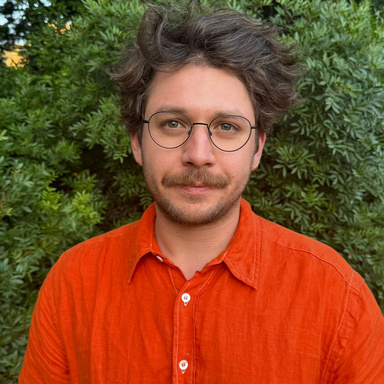
Adam Schorin
Degree: MFA, creative writing
Research project: The Theater of Memory: Moral Performance Around Jewishness in Contemporary Germany
Destination: Germany
Home city: New York, New York
“I will study contemporary Jewishness in Germany through the lens of Erinnerungskultur—‘remembrance culture,’ the country’s ongoing reckoning with its Nazi past and the Holocaust—and what sociologist Y. Michal Bodemann and German Jewish writer Max Czollek have called ‘the theater of memory.’ This concept critiques Erinnerungskultur as performative, arguing that Jews in Germany are often positioned as absolvers of national guilt and as evidence of postwar multiculturalism. This research is essential to a chapter of my novel in progress, which will also serve as my MFA thesis.
The Stanley Award for International Research will make it possible for me to travel to Germany, where I will document site visits, interview local experts, and participate in relevant cultural events.”
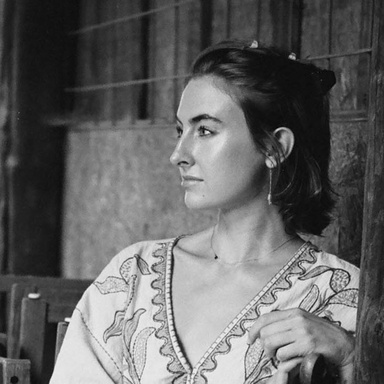
Emily Rose Soreghan
Degree: MFA, creative writing (fiction)
Research project: An Exploration of Radical Female Contemplatives in Medieval France
Destination: France
Home city: Norman, Oklahoma
“I will travel to France to research the high point of female Christian asceticism between 1100 and 1500, focusing on the lives and works of five women—transgressive theologians, scholars, writers, and mystics. These figures challenged religious, intellectual, and social norms, yet their contributions have often been marginalized or overlooked.
This research is essential to my MFA thesis and novel-in-progress, which features a character, Jeanne de Valois, who is a composite of these historical women. The Stanley Award for International Research will make it possible for me to visit non-digitized archives containing key materials about their lives, as well as the sites where they lived and worked, allowing for a more informed and resonant portrayal of Jeanne.”
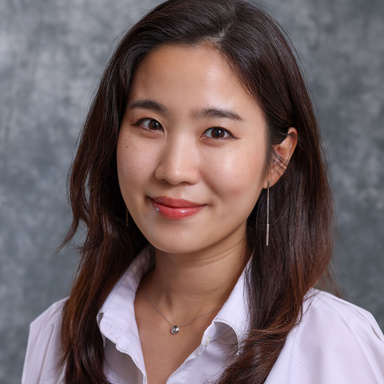
Nayung Youn
Degree: PhD, nursing
Research project: How do social factors and different health systems shape mHealth engagement in cancer care?
Destination: South Korea
Home country: South Korea
“This study examines how social and structural factors—often referred to as social determinants of health (SDOH)—shape engagement with mobile health (mHealth) technologies and influence cancer care. By conducting qualitative research in South Korea’s universal health insurance system among individuals from diverse SDOH backgrounds and comparing findings with the United States, I aim to understand why similar mHealth interventions produce different impacts across contexts. This work advances my long-term goal of designing mHealth interventions tailored to unmet needs to reduce inequities in cancer care among vulnerable populations.
The Stanley Award for International Research will support the international data collection required to compare cancer patients across two countries with fundamentally different health care systems. This funding will further strengthen my training in qualitative and comparative health systems research while helping build international research collaborations.”

Lionel Zaccardi
Degree: MFA, book arts
Research project: Punchcutting in France and Belgium: The Synthesis of Historic and Contemporary Methods
Destination: France and Belgium
Home city: Coral Springs, Florida
“I am conducting research into the craft of typographic punchcutting—the process by which all raised metal printing type was made in Europe from 1450 to 1840. By handling historic materials in Belgium and visiting contemporary practitioners in France, I will further develop my craft and help sustain this historic practice.
Today, there are only a handful of active punchcutters. I have conducted research with the sole master punchcutter in North America, and the Stanley Award for International Research will allow me to study the craft’s roots in Europe as I approach my thesis year.”
Learn more about the Stanley Awards for International Research
International Programs (IP) at the University of Iowa (UI) is committed to enriching the global experience of UI students, faculty, staff, and the general public by leading efforts to promote internationally oriented teaching, research, creative work, and community engagement. IP provides support for international students and scholars, administers scholarships and assistance for students who study, intern, or do research abroad, and provides funding opportunities and grant-writing assistance for faculty engaged in international research. IP shares their stories through various media, and by hosting multiple public engagement activities each year.