Energy projects can have far‑reaching environmental and social effects for nearby communities. On April 21, the South Asian Studies Program, a University of Iowa (UI) International Programs affinity group, will host a virtual lecture examining how nuclear energy production in India shapes experiences of disability, reproductive health, and medical care.
Imag(in)ing Irradiated Disabled Fetus: Understanding Disability after New Reproductive Technologies in Necrovital Conditions
Date & Time: Tuesday, April 21, 2026, 7 – 8:15 p.m. (CDT)
The event is free and open to the public and will take place virtually.
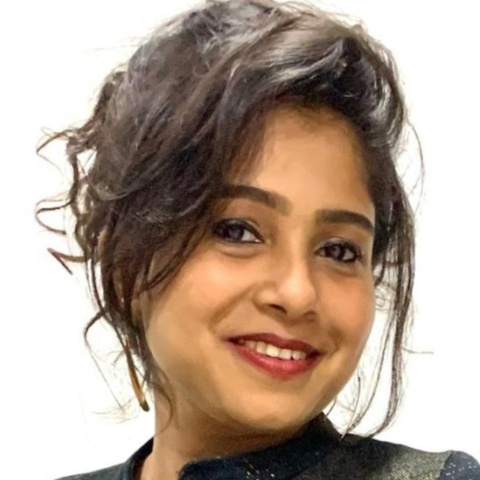
The lecture will be presented by Dr. Misria Shaik Ali, a post-doctoral fellow in the Department of Humanities and Social Sciences at the Indian Institute of Technology (IIT) Delhi. Her lecture draws on research conducted near the Tummalapalle Uranium Mine and Mill (TUMM) in southern India.
In 2016, farmers in MC Palle and Kottala, along with pollution authorities, identified the presence of uranium in borewells near the Tummalapalle Uranium Mine and Mill (TUMM), which they linked to the mine’s operations. In the years since, residents experiencing radiation-related health concerns have often sought care at private hospitals owned by relatives of local elected officials, pointing to the close relationships among medical services, industry, and regional governance.
Dr. Ali describes the emergence of what she terms a medico-nuclear-industrial complex at TUMM, in which fertility concerns are frequently framed as “a female problem,” and reproductive bodies come under increased medical attention through fertility testing and prenatal screening. Drawing on an eco-crip framework, she examines how medical interpretations of fetal images can reflect what she characterizes as a “eugenics logic of eliminating disability.”
“Energy is an environmental and reproductive justice issue,” shared Meena Khandelwal, professor of anthropology, and co-director of the South Asian Studies Program. “Learn about the impacts of nuclear energy projects in India for those living near uranium mining and milling sites, and especially for irradiated pregnant women whose wombs become subject to biomedical imaging, intervention, and interpretation.”
About the Speaker
Dr. Misria Shaik Ali earned her PhD in science and technology studies from Rensselaer Polytechnic Institute (NY) and is currently a post-doctoral fellow in the Department of Humanities and Social Sciences, Indian Institute of Technology (IIT) Delhi. Her research focuses on irradiation and politics of neglect in India's nuclear fuel cycle and on how controversies end and for whom. Her writings have been platformed by Maktoob Media, Platypus, Science, Technology and Human Values, Seminar Magazine, Tapuya: Latin American Science, Technology and Society, The Wire.in, and others.
Individuals with disabilities are encouraged to attend all University of Iowa–sponsored events. If you are a person with a disability who requires a reasonable accommodation in order to participate in this program, please contact Daniel Vorwerk in advance at 319-497-1619 or daniel-vorwerk@uiowa.edu.
International Programs (IP) at the University of Iowa (UI) is committed to enriching the global experience of UI students, faculty, staff, and the general public by leading efforts to promote internationally oriented teaching, research, creative work, and community engagement. IP provides support for international students and scholars, administers scholarships and assistance for students who study, intern, or do research abroad, and provides funding opportunities and grant-writing assistance for faculty engaged in international research. IP shares their stories through various media, and by hosting multiple public engagement activities each year.