
From visiting majestic mountains and exploring cultural traditions, to visiting business districts, schools and local hospitals, University of Iowa (UI) students spent the summer learning around the world through faculty-led study abroad programs that turned the world into their classroom.
This summer and fall, nearly 170 students participated in 10 faculty-led study abroad programs spanning a wide range of academic disciplines, including chemistry, business, public health, nursing, education, writing, and the humanities. Together, the programs showcase the wide variety of global learning opportunities available at Iowa and the important role faculty play in helping students learn beyond campus.
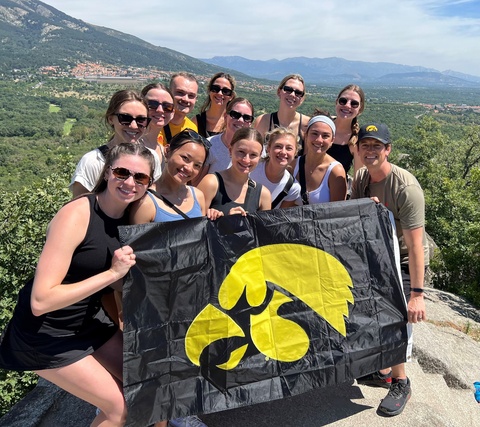
Summer and fall 2026 faculty-led programs included:
Sustainable Chemistry Along the Rhine River – Germany & Switzerland (21 students)
Introduction to Global Business – Singapore (16)
Ancient Perspectives, Modern Eyes - Greece (17)
Child Life Experiential Learning in Cape Town – South Africa (20)
Ghana Education and Culture (14)
Exploring Major Determinants of Health in Spain (22)
Irish Writing Program – Ireland (18)
Iowa Hispanic Institute – Spain (15)
Maternal Health Abroad – Costa Rica (10)
Community, Public Health, and Gerontological Nursing Practicum Abroad - Netherlands (15)
Faculty-led study abroad programs are one way the University of Iowa puts its strategic commitment to excellence in teaching and learning into practice. By combining classroom instruction with real-world experiences, these programs help students earn University of Iowa resident credit while building knowledge, confidence, and skills they can carry into their future careers.
“Faculty-led programs are a unique model within the study abroad portfolio because they allow students to travel with fellow University of Iowa students and a University of Iowa faculty member,” said Lindsay Budde, senior faculty-led program coordinator, UI Study Abroad. “These short-term opportunities allow students to delve deep into the coursework within a structured and supportive environment abroad. Faculty get to bring academic concepts to life through hands-on experiences that would be impossible to replicate in the classroom. The short nature of these courses also works great for students who have other obligations that wouldn’t allow for a longer experience.”
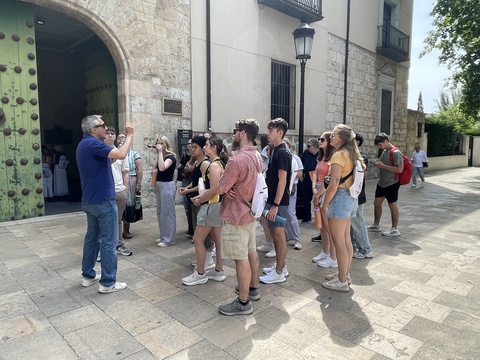
Whether students are examining sustainable chemistry practices, studying healthcare systems abroad, engaging with local communities, or exploring the historical foundations of civilizations, they are gaining perspectives and experiences that often expand on what is taught in a traditional classroom.
The impact of going on a faculty-led study abroad program can continue long after students return to Iowa. Faculty leaders often see students carry those experiences into their academic lives on campus, shaping the courses they take, the fields they pursue, and the connections they build.
“Many of my study abroad students have enrolled in the next semester's classes with me, added one of our department's majors, or joined our department's student organization after the trip,” said Debra Trusty, distinguished associate professor of instruction, classics, who leads two three-week long faculty-led study abroad programs in Greece called Ancient Perspectives, Modern Eyes and City of Athens. “It is extremely rewarding to watch students' interest in the field grow and see how a study abroad experience can lead to their long-term engagement with the field.”
Designing and leading a course abroad also gives faculty the opportunity to teach in new ways. From incorporating local experts and organizations to using cities, museums, hospitals, and communities as learning spaces, faculty create experiences that connect course concepts to the world around them.
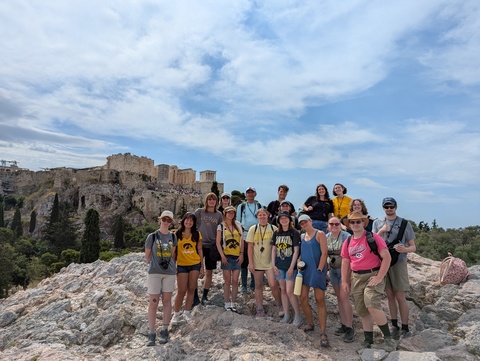
“Traveling with students provides me with opportunities to network and engage with scholars and archaeologists around Greece, in addition to visiting museums and viewing new exhibits,” Trusty said. “This regular engagement strengthens and updates my professional knowledge and skills, and I have often incorporated these new pieces of information into my future lectures and classes.”
Faculty-led programs encourage instructors to explore new teaching approaches, build international partnerships, and bring fresh ideas back to their classrooms at Iowa.
As faculty at Iowa continue creating global learning opportunities for their students, UI Study Abroad remains committed to partnering with instructors to expand access to international education and help more students experience the world as part of their Iowa education.
“By bringing learning beyond the traditional classroom, faculty-led study abroad programs give students the global perspectives and experiences they need to lead, problem solve and thrive in an interconnected world,” said Autumn Tallman, director, international risk management and study abroad, UI Study Abroad. “Study Abroad works alongside faculty to turn course ideas into meaningful international experiences, whether that means building on existing faculty connections abroad or helping develop new partnerships. We also draw on a network of global support partners to provide student services and safety support throughout the experience. That collaboration is an important part of advancing the University of Iowa’s commitment to student success, discovery and global engagement.”
International Programs (IP) at the University of Iowa (UI) is committed to enriching the global experience of UI students, faculty, staff, and the general public by leading efforts to promote internationally oriented teaching, research, creative work, and community engagement. IP provides support for international students and scholars, administers scholarships and assistance for students who study, intern, or do research abroad, and provides funding opportunities and grant-writing assistance for faculty engaged in international research. IP shares their stories through various media, and by hosting multiple public engagement activities each year.