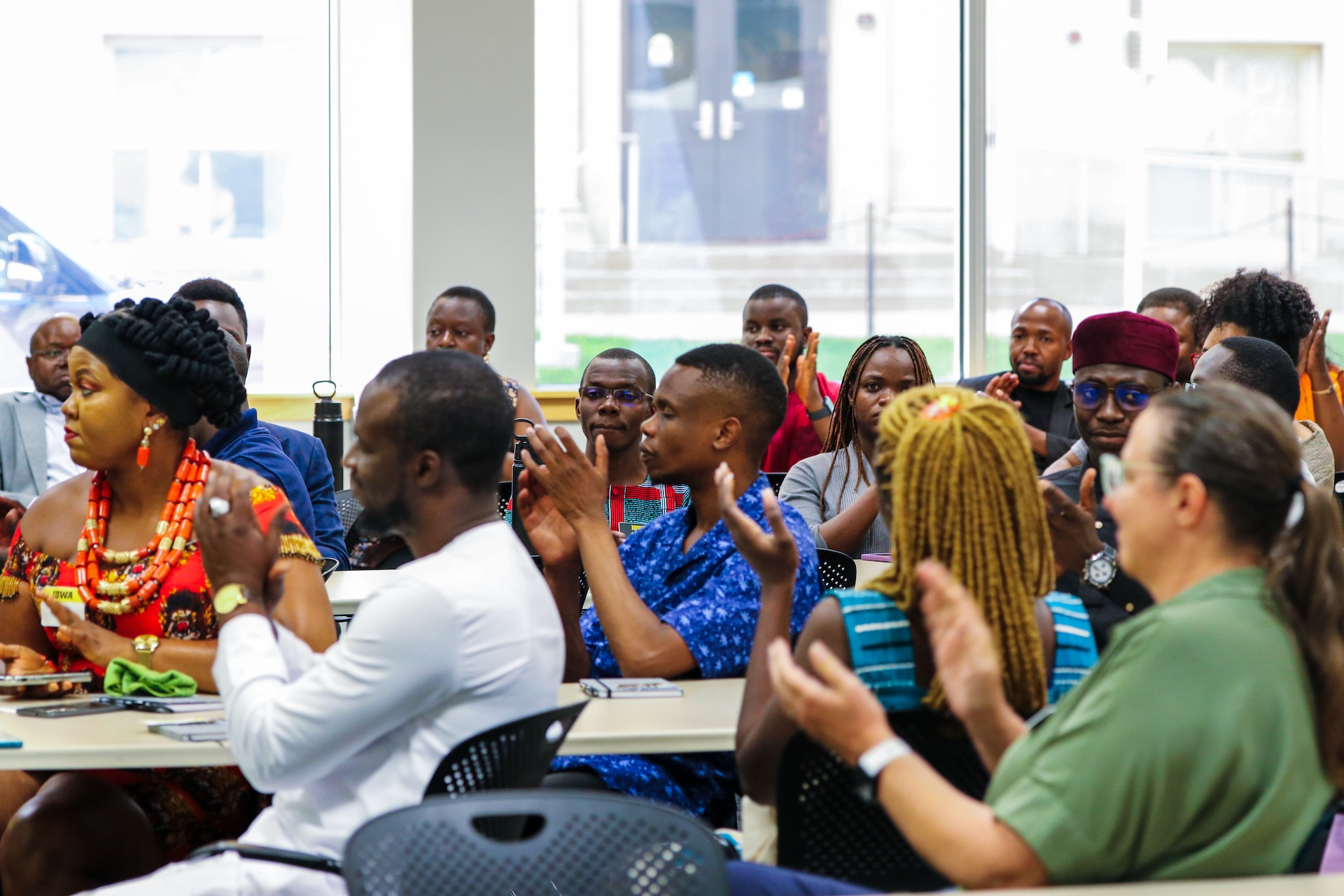
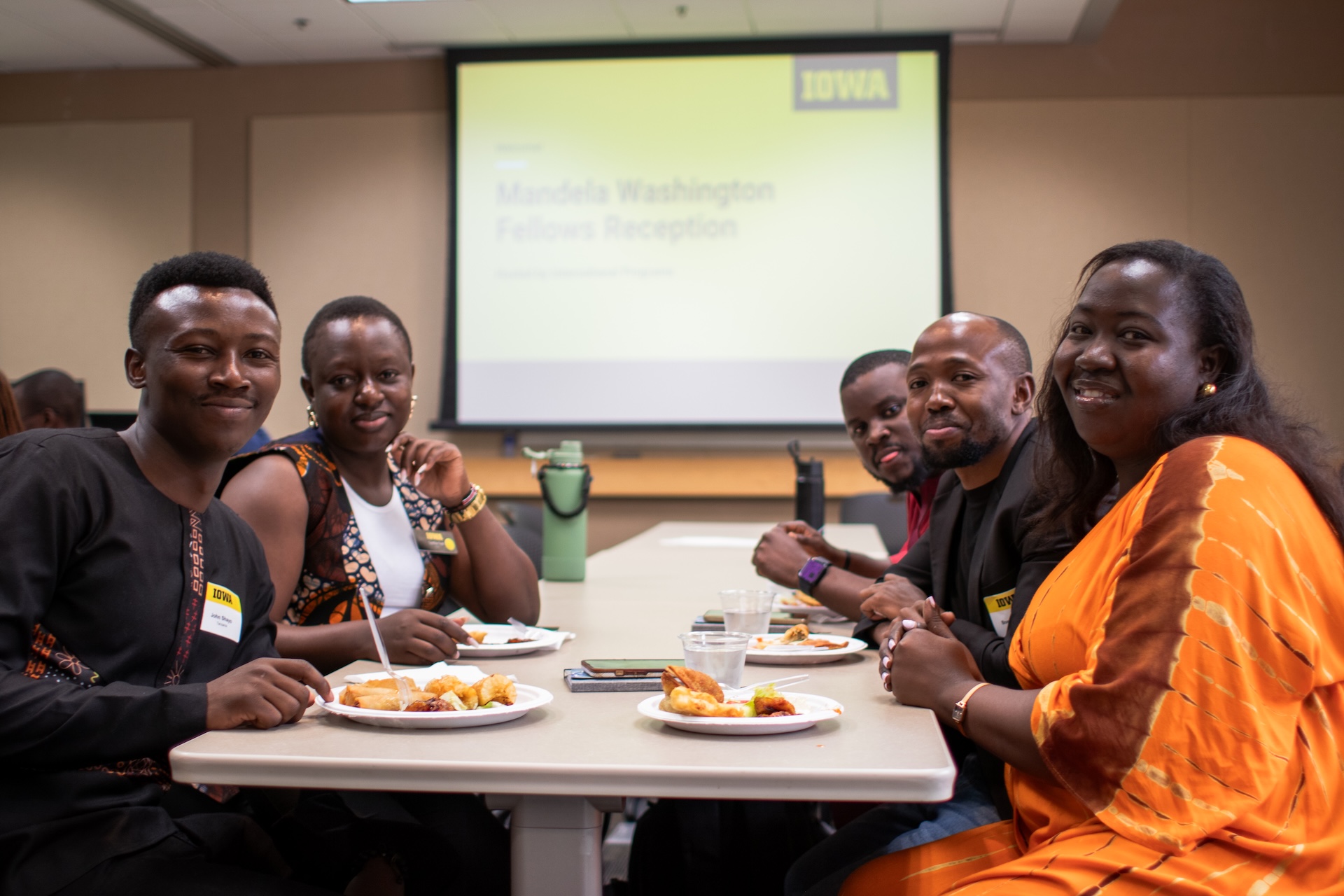
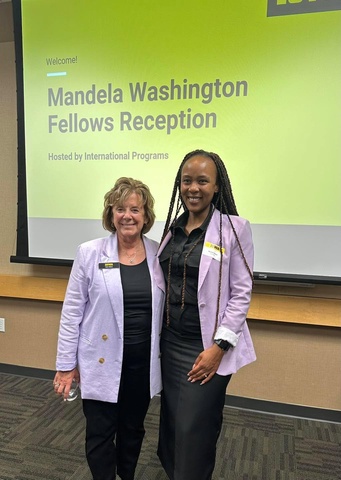
University of Iowa (UI) International Programs hosted a reception on July 15 to honor the Mandela Washington Fellows for their achievements and commitment to leadership development. The group of African leaders and entrepreneurs came to Iowa with bold ideas—and are leaving as critical thinkers with a plan of action.
“The people at this institution provoked our minds to be generational thinkers—to be people who think ahead in order to create true impact in our various businesses and organizations,” said Chindele Chingumbe, one of this year’s Fellows.
For nine years, Iowa has welcomed a cohort of Fellows to campus for six weeks as part of a U.S. Department of State program, bringing bright young leaders from every country in Sub-Saharan Africa to the United States.
Russ Ganim, associate provost and dean of IP, welcomed the group with high praise for their accomplishments and expressed gratitude for how the partnership strengthens Iowa’s connection to the world.
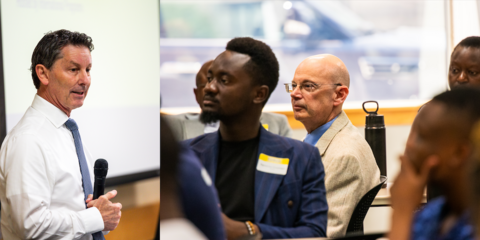
“It’s always a delight to see the Fellows on our campus,” said Ganim. “These fellows have been chosen to participate in this program because, in their home countries, they have established records of accomplishment in promoting innovation and positive change in their organizations, businesses, institutions, and communities.”
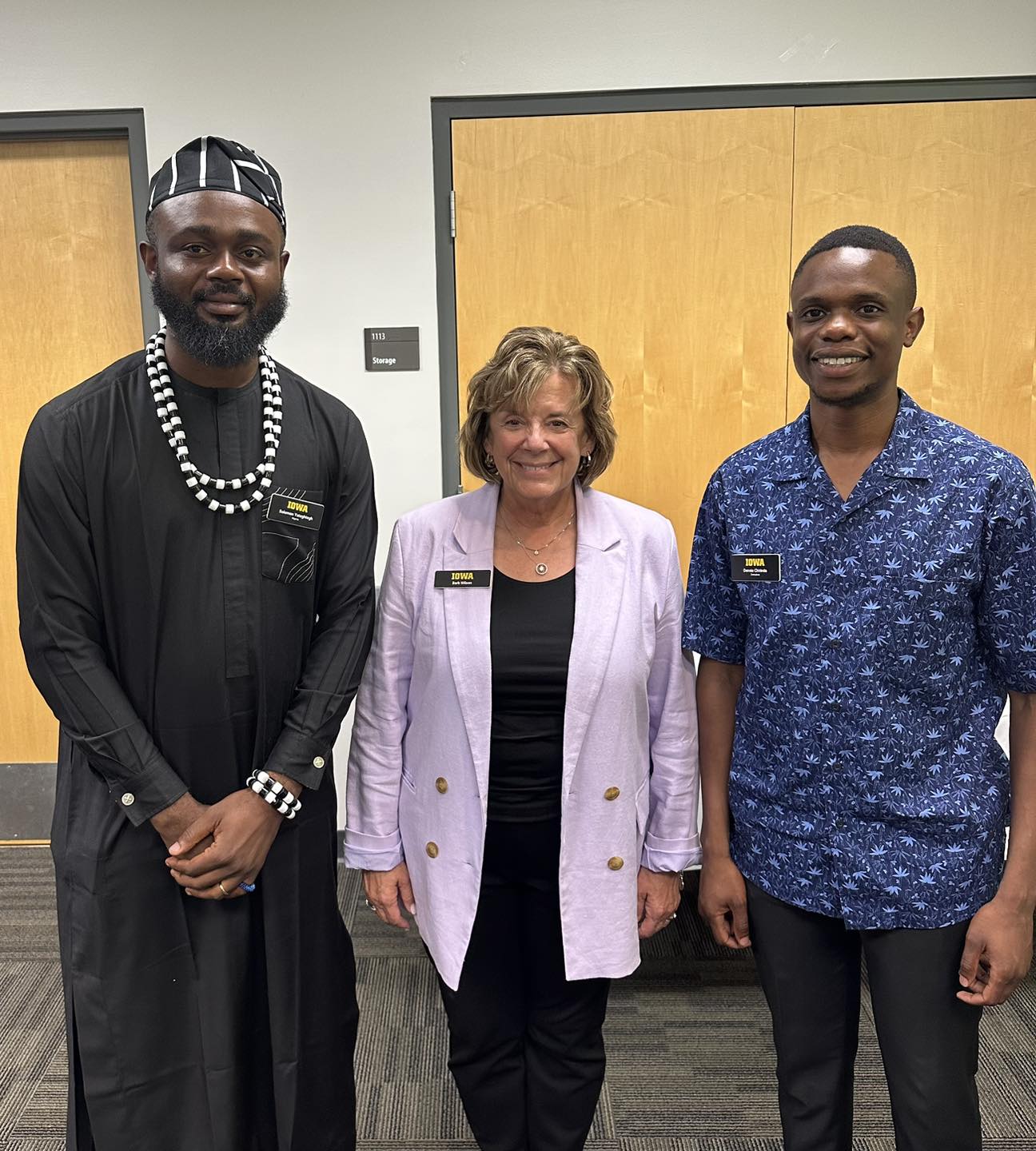
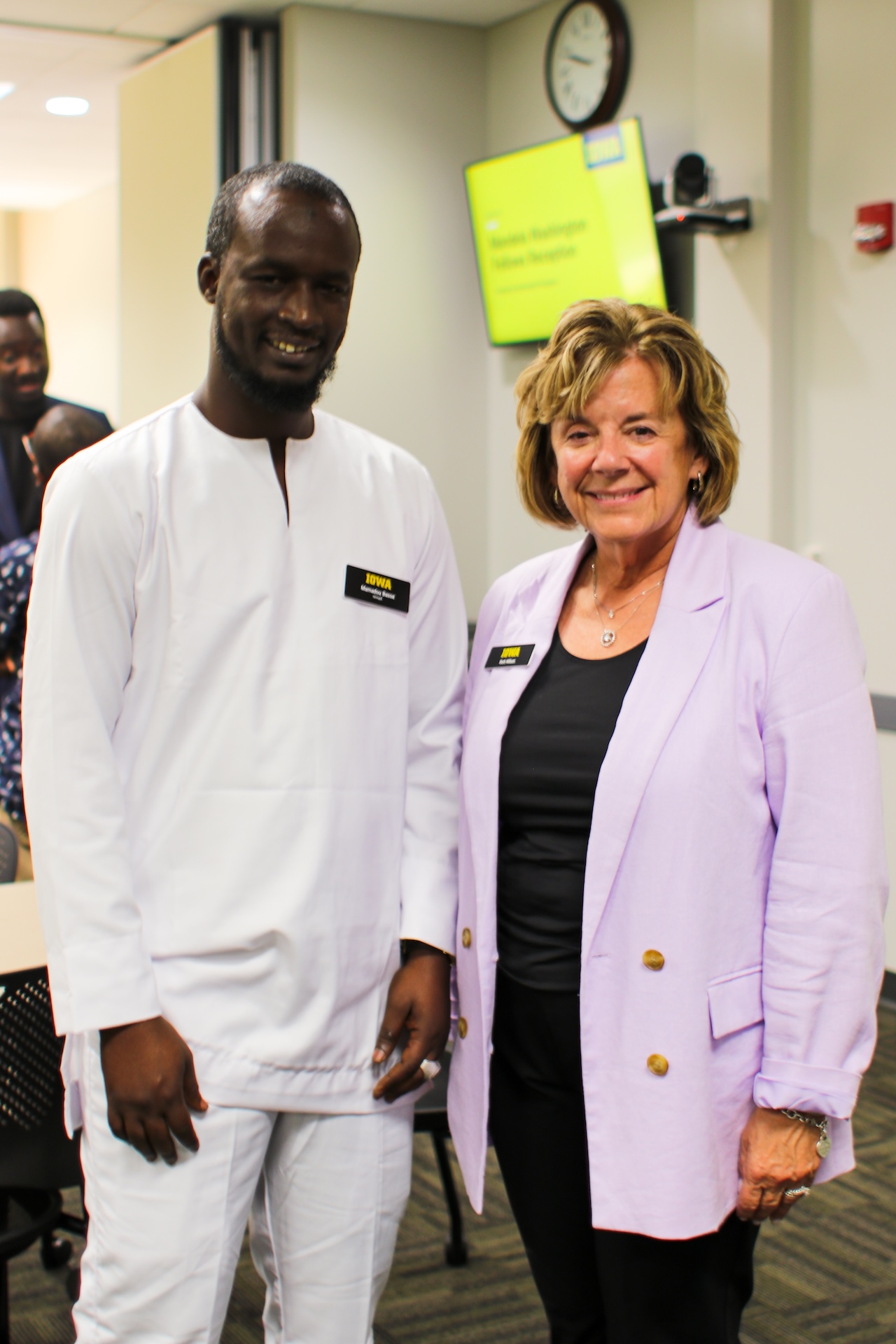
Among those at the reception was UI president Barbara Wilson, who met personally with the Fellows, and Kevin Kregel, UI executive vice president and provost.
“It was a true pleasure to meet the Mandela Washington Fellows and personally welcome them to the University of Iowa,” Wilson said. “Hosting these outstanding young leaders here on our campus highlights University of Iowa’s dedication to building lasting connections globally. This program is a clear example of how Iowa is extending its reach internationally, and we hope to continue building lasting partnerships that extend far beyond our borders.”
This year’s cohort included a wide range of professional backgrounds, including AI technology, community development, engineering, food security, and fashion design.
“If young people can engage in these types of entrepreneurial skills—utilizing their hands, their talents—then they’ll become problem solvers that really think ahead instead of waiting for a solution to appear.”
Hailing from Zambia, Chingumbe is a social entrepreneur and the founder of Jonuel Entrepreneurship Foundation (JEF), a youth-led foundation that provides training and resources to young people in Zambia.
Chingumbe said he is striving to create a work culture back home that is similar to the U.S. in hopes of growing his foundation.
“People here are determined to utilize every opportunity to use their skills and their time,” Chingumbe said. “That’s one thing that’s really lacking in our own culture back home; we tend to take everything lightly. But here, every moment counts, and I’ll make sure to implement that culture back home.”
Chingumbe plans to use the entrepreneurial skills and knowledge he gained at Iowa to help Zambian youth harness their talents.
“If young people can engage in these types of entrepreneurial skills—utilizing their hands, their talents—then they’ll become problem solvers that really think ahead instead of waiting for a solution to appear,” Chingumbe said.
Cynthia Toel, a Kenyan mechanical engineer and project manager for Esbrapy International, a construction company, described the Fellowship as life changing.
“As a woman in construction and engineering, it has given me the knowledge, confidence, and global network to lead boldly,” Toel said. “This experience has reignited my vision to build a business that excels and creates space for women in STEM and construction.”
Toel came to Iowa in hopes of making her vision for the construction industry a reality. Through the Institute for International Business and the John Pappajohn Entrepreneurial Center (JPEC), Toel’s vision for the construction business in Kenya will grow stronger and more inclusive.
“When I return home, I will scale Esbrapy International with stronger systems and purpose-driven leadership, mentor young women in engineering, champion inclusion in the construction industry, and fight period poverty because menstrual health is about dignity, access, and education,” Toel shared.
“More broadly, the Fellowship shapes African leaders who build sustainable, self-reliant futures by breaking aid dependence and powering homegrown solutions that transform communities and economies,” she added.
The Mandela Washington Fellows found their time in Iowa transformative, both within the Fellowship and beyond. After experiencing everyday life in Iowa, Chingumbe described his time in the state as “full of activity and very memorable.”
“I would say that Iowa City as a city looks simple at first glance, but it’s incredibly vibrant because of the people who live here,” Chingumbe said. “You look around, and the people here, this institution, are all extraordinary.”
International Programs (IP) at the University of Iowa (UI) is committed to enriching the global experience of UI students, faculty, staff, and the general public by leading efforts to promote internationally oriented teaching, research, creative work, and community engagement. IP provides support for international students and scholars, administers scholarships and assistance for students who study, intern, or do research abroad, and provides funding opportunities and grant-writing assistance for faculty engaged in international research. IP shares their stories through various media, and by hosting multiple public engagement activities each year.